Projects
For the sick and those in need, the world over.
IRESO Rio de Janeiro e.V.

Since 2018 we have supported the association IRESO Rio de Janeiro e.V. (https://www.ireso.org/), founded in Germany in 2011, which acts as an intermediary between donors, German companies and aid organisations on the one hand and Brazilian partners on the other, in order to deliver sustainable development projects.
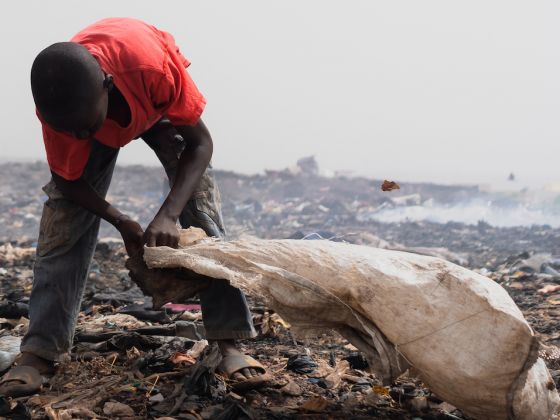
The project partner in Rio de Janeiro is "Redes da Maré", a Brazilian non-governmental organisation working in the Maré favela complex. Some 130,000 people live in Maré on an area of 6 km². Life in the favelas (poor districts) is marked by poverty, crime, violence and the drug trade.
IRESO's aim is to help disadvantaged children and young people from the favelas of Rio de Janeiro through vocational, health and social projects.
Heróis contra Dengue
Dengue fever is the fastest-spreading viral disease in the world. It is transmitted by mosquitoes, and Brazil is one of its hotspots. The disease causes immense human suffering and economic damage running to several billion euros.
In 2010 Norbert Lehmann, President of IRESO e.V., conceived and developed the project "Heróis contra Dengue" ("Heroes against Dengue"). The project trains young volunteers to act as multipliers, informing residents in their own communities about the dangers of the viral diseases Dengue, Zika, Chikungunya and Febre Amarela, which are transmitted by the mosquitoes Aedes aegypti and Aedes Albopictus. In this way the young people make a substantial contribution to reducing both the mosquito population and the infection rate in their communities. Through the METIS learning programme developed by IRESO, which underpins the project, the social, emotional, cognitive and motor skills of the young volunteers are also developed and strengthened, and residents are encouraged to take personal responsibility.
Robotec
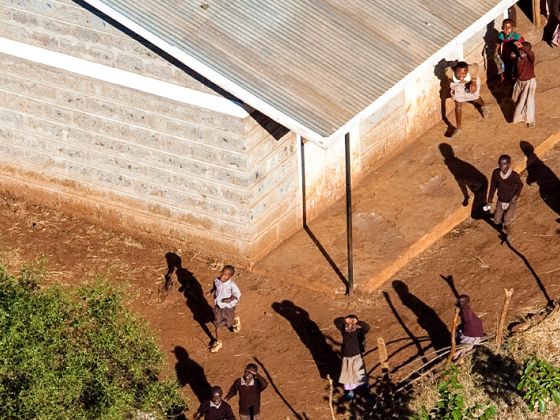
For a variety of reasons, many young people in developing and emerging countries have no opportunity to receive a forward-looking vocational training and so remain trapped in the cycle of poverty. To offer them a way out, IRESO runs the Robotec project.
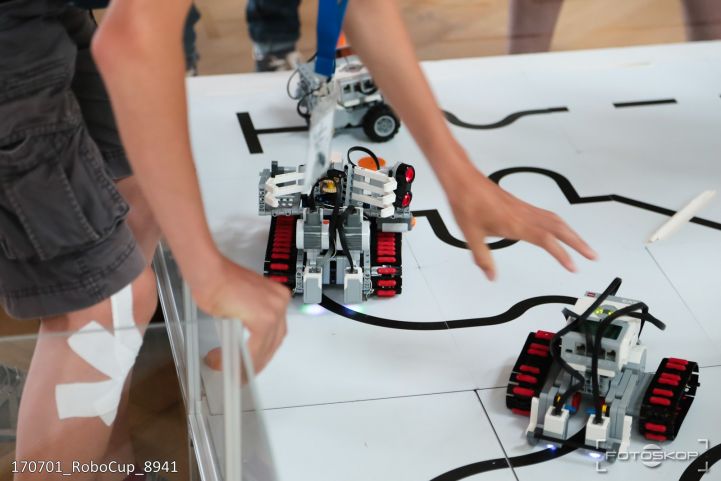
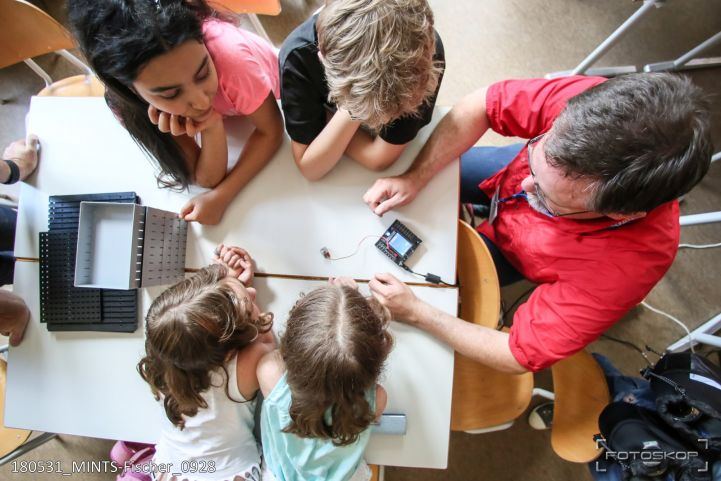
Young people are trained in programming through IRESO's METIS learning programme, using technical, programmable teaching tools such as Calliope, Scratch and Fischertechnik.
In the first stage of the project, the aim is to introduce children and young people to graphical programming languages in a playful way. Through programmable teaching tools they enter the world of programming and robotics.
In the second stage, particularly motivated participants can go on to learn text-based programming, laying the groundwork for a future career.
Overview
Projects of the Rexroth Foundation